

As we move through the first quarter of 2026, the Singapore property market has officially decoupled from the high-volatility cycles of the early 2020s. We are now in an era of “Strategic Stability,” where capital is no longer chasing broad market momentum but is instead surgically targeting assets tied to structural transformations. With the Urban Redevelopment Authority (URA) property price index showing a measured growth of $3\%$ to $4\%$, the real winners are those looking at “Integrated Gateways”—precincts where new transit lines, elite education, and sustainable urbanism converge.
The Forest Town Maturation: A Yield Play in the West
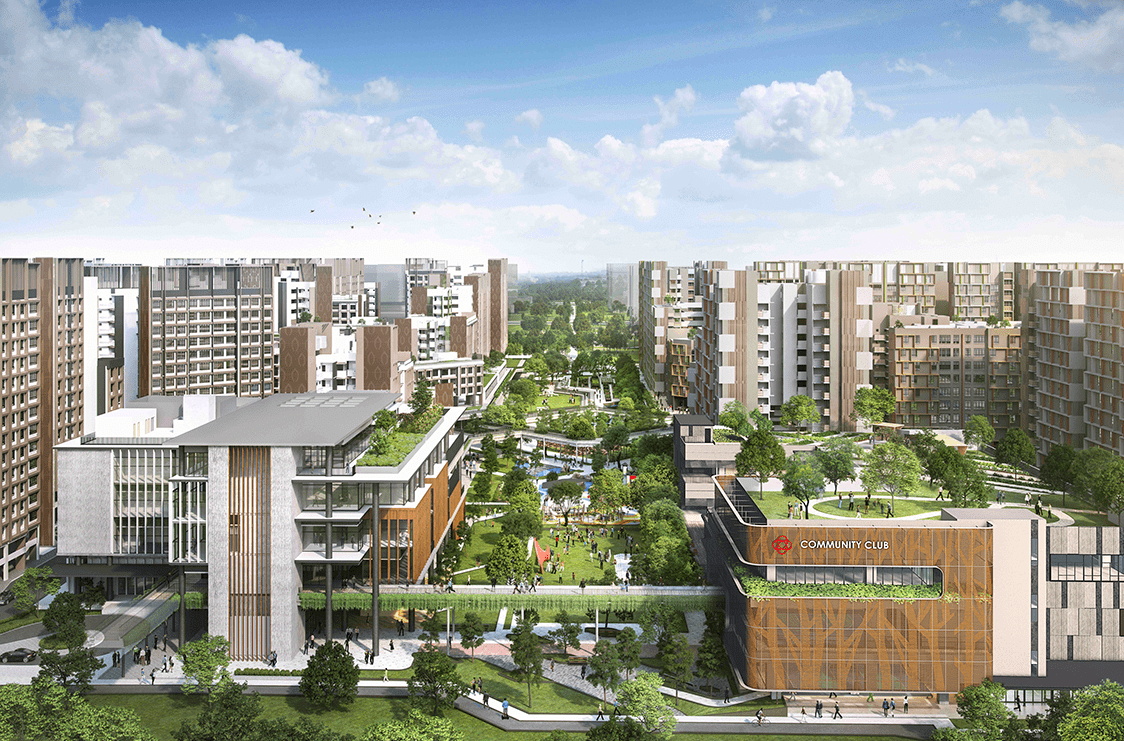
Tengah is no longer a visionary sketch; it is a functioning ecosystem. With over 14,000 households already in residence and the Parc Point Neighbourhood Centre officially opening its doors this quarter, the “Western Gateway” has reached its critical tipping point. For investors, the narrative has shifted from speculative land banking to high-conviction rentability. The catalyst? The Jurong Region Line (JRL) entering its first phase of operation, connecting the town directly to the high-value Jurong Innovation District.
The definitive anchor for this region is Tengah Garden Residences. In a 2026 market that prioritizes “The Green Premium,” this development stands out by offering a level of biophilic integration that older suburban estates cannot match. The Tengah Garden Residences facilities are specifically engineered for a carbon-conscious workforce, featuring automated waste systems, smart-energy monitoring, and elevated linkways that connect residents directly to the 20-hectare Central Park. For the high-tech professionals working in the nearby “Factories of the Future,” these facilities are a primary draw, ensuring that rental demand remains insulated from broader economic headwinds.
Furthermore, the “social hardware” of the West has been upgraded. The relocation of primary schools and the establishment of dedicated healthcare hubs mean that family living in Tengah is now a lifestyle of convenience rather than compromise. For the first-time buyer or upgrader, the ability to raise a family in a car-lite environment—where children can commute safely via garden trails—represents a generational upgrade in quality of life that traditional districts struggle to provide.
The Bayshore Wave: Coastal Scarcity Meets Rapid Transit
While the West masters the forest, the East is capitalizing on the “Blue Economy.” The full operationalization of the Thomson-East Coast Line (TEL) Stage 5 in 2026 has fundamentally “shrunk” the distance between the seaside and the city. Bayshore is no longer just a recreational park; it has become a premier residential enclave that offers a 20-minute rapid-transit commute to the Marina Bay Financial Centre.
Vela Bay is the vanguard of this coastal renaissance. As the precinct undergoes its first major private injection in decades, the project offers a rare combination of waterfront scarcity and transit-oriented efficiency. The urban lifestyle Vela Bay provides is tailored for the “Modern Nomad”—the high-income professional who seeks a resort-like sanctuary without sacrificing the pulse of global commerce. Standing at the doorstep of the Bedok South MRT station, it offers an unparalleled “20-minute city” experience.
The investment thesis here is anchored by the Vela Bay condo features, which have been designed for a super-aged and digital-first society. From barrier-free wellness pavilions to integrated co-working lounges with panoramic sea views, these features cater to a wide demographic spectrum—from young tech entrepreneurs to affluent retirees looking to “right-size” into a premium environment. As the “Long Island” reclamation project further develops, these seaside assets are increasingly being viewed as legacy properties with significant long-term capital protection.
2026: The Year of the Informed Buyer
The market in 2026 does not reward generic strategies. It rewards those who understand the “Newness Factor”—the premium tenants are willing to pay for modern, smart-integrated facilities.
- Supply Dynamics: With over 60% of new private supply concentrated in the Outside Central Region (OCR), buyers have more choices than ever. However, this also creates “value traps” in poorly connected projects.
- Rate Resilience: As mortgage rates stabilize between $1.5\%$ and $1.8\%$ for fixed packages, the focus has returned to loan-to-value efficiency and total interest costs.
- Sustainability as a Filter: In 2026, a “green” building is no longer optional; it is a prerequisite for long-term liquidity. Investors are increasingly shunning older, inefficient stock in favor of developments that mitigate rising energy costs through smart design.
Conclusion: Positioning for the Next Decade
The choice between the “Forest” and the “Sea” is a choice between two high-performance narratives. Whether you are banking on the community-centric family living in Tengah or the high-prestige urban lifestyle Vela Bay represents, you are investing in a version of Singapore that is greener, faster, and more intentionally designed.
The opportunity window for these “Gateway Assets” is defined by the completion of infrastructure. With the MRT lines now operational and the amenities open, the “waiting risk” has vanished. For the strategic buyer, the time to secure a stake in these transformed corridors is now, before the next wave of land bids resets the price benchmarks even higher.